Key Points
- Than 20,000 people visited Swansea Minster during the three-week Gaia installation according to The Church in Wales.
- The artwork, created by renowned artist Luke Jerram was displayed from 12 to 31 October 2026.
- Gaia measured six metres in diameter. Used detailed NASA imagery of Earth’s surface.
- The installation formed part of the Gaia Creationtide Festival, which included worship, concerts, performances, environmental events, children’s activities and opportunities for reflection.
- The Church in Wales said the exhibition brought audiences into the Minster and opened conversations about faith, creation and the future of the planet.
- The Rev’d Canon Justin Davies, Rector of Swansea said the installation came to the Minster during Creationtide commemorating God’s creation of heaven and earth.
- Christian Aid hosted an event beneath the artwork on 19 October with Angelina Nyajima Simon Jial, Founder and Director of Hope Restoration South Sudan.
- Llandovery College reported that its Chamber Choir and organ scholar Gareth performed beneath the installation.
- The installation was free to visit, with Swansea City of Sanctuary noting opening hours of 9.30am to 4pm during its week.
Swansea (Wales Times) November 04, 2026 – uk/local/swansea/">Swansea Minster’s Gaia installation attracted more than 20,000 visitors during a three-week exhibition, according to The Church in Wales, which said the artwork brought new audiences into the church and encouraged discussions on faith, creation and the planet’s future.
The Church in Wales reported that visitors came for different reasons: some wished to see the artwork, others attended music and worship events, while some spent time beneath the suspended image of Earth. The organisation described the response as an opportunity for the Minster to connect with thousands of people, including many who would not ordinarily visit a church.
As reported by The Church in Wales, the Gaia Creationtide Festival offered “something potentially more enduring” than the visual spectacle, by creating a chance for the Minster to engage with a wider public.
What Was the Gaia Installation?
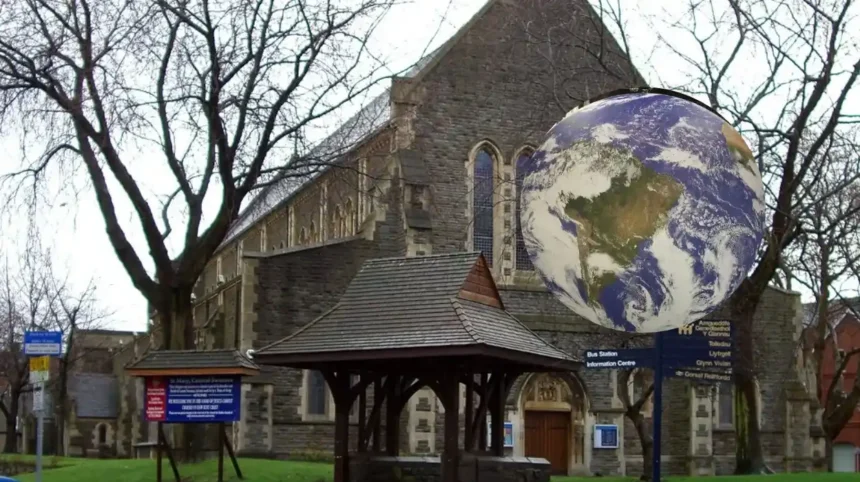
Gaia was a large-scale artwork by Luke Jerram, displayed at Swansea Minster from 12 to 31 October 2026. Swansea Minster described it as a six-metre-diameter representation of Earth, created from 120dpi detailed NASA imagery of the planet’s surface and designed to show Earth floating in three dimensions.
The installation was presented during Creationtide, a season observed by churches to reflect on creation and care for the environment. As reported by The Church in Wales, the Rev’d Canon Justin Davies, Rector of Swansea, said:
“The feast of creation commemorates God’s act of the creation of heaven and earth, all that is seen and unseen.”
The Church in Wales said the sight of Earth suspended inside the Minster gave visitors a different perspective on the world around them.
Which Events Took Place Beneath Gaia?
The Minster hosted three weeks of cultural, community and religious events alongside the installation. According to The Church in Wales, the programme ranged from concerts and performances to worship, environmental events, children’s activities and opportunities for reflection.
Christian Aid listed a special event on Monday 19 October at 6pm, inviting people to hear Angelina Nyajima Simon Jial, Founder and Director of Hope Restoration South Sudan, beneath the artwork. The event included light refreshments and began formally at 7pm.
Llandovery College reported that its College Chamber Choir and Year 10 organ scholar Gareth performed at St Mary’s Church, Swansea, beneath Gaia. The college described the setting as a unique environment for musical performance.
Swansea City of Sanctuary also promoted a Stories of Home: Refugee & Asylum Seeker Day at the Minster on Thursday 29 October, from 10am to 2pm, during the final week of the exhibition.
How Did Visitors Respond to Gaia?
The Church in Wales did not publish a breakdown of visitor numbers by event or demographic, but said more than 20,000 people attended during the three-week run. It said the exhibition opened conversations about faith, creation and the future of the planet.
Public listings indicated that entry was free. Swansea City of Sanctuary stated that visitors could attend every day during the final week from 9.30am to 4pm. Swansea Minster also noted that it remained open later during the Gaia exhibition and on some days when services or events were taking place.
The artwork’s scale and use of NASA imagery were central to its appeal. Swansea Minster’s own listing emphasised that the installation allowed people to see the planet “floating in three dimensions”.
What Happens After Gaia Leaves Swansea?
The installation closed at Swansea Minster on 31 October 2026. Luke Jerram’s schedule lists Gaia as appearing at Swansea Minster from 12 to 31 October, with subsequent UK and international appearances including Derry Halloween, Light Night Wigan, Grote Kerk Breda in the Netherlands, St Albans Cathedral and Hereford Cathedral.
The Church in Wales framed the Swansea exhibition’s legacy in terms of audience engagement rather than announcing a permanent installation or follow-up programme. It said the festival had created an opportunity for the Minster to connect with thousands of people who might not otherwise enter a church.
Background of the Development
Gaia is an artwork by Luke Jerram based on detailed NASA imagery of Earth. Swansea Minster described the version shown in Swansea as six metres in diameter and created from 120dpi NASA imagery. The work was shown at the Minster between 12 and 31 October 2026 as part of the Gaia Creationtide Festival.
Creationtide is a church season focused on creation and environmental responsibility. The Rev’d Canon Justin Davies told The Church in Wales that the festival commemorated God’s creation of heaven and earth. The Minster’s programme combined the visual installation with worship, music, community events and environmental activities.
The exhibition also formed part of a wider touring schedule for Jerram’s Gaia works. His published schedule records Swansea Minster from 12 to 31 October, alongside other venues in the UK, Ireland, the Netherlands and beyond.
Prediction: What Could This Mean for Swansea?
For Swansea’s cultural and community organisations, the visitor figure suggests that large-scale, free public art can draw substantial audiences to a city-centre heritage venue. If the Minster builds on the contacts and interest generated by the festival, it may be able to develop future audiences for worship, music, environmental discussion and community events.
For local residents, the development indicates growing demand for accessible cultural experiences that combine art, science imagery and reflection. The free entry arrangements and broad event programme made the exhibition available to families, school groups, faith communities and visitors.
For churches and charities in Wales, the result may encourage similar collaborations between arts organisations, environmental groups and community partners. The involvement of Christian Aid, Swansea City of Sanctuary, Llandovery College and other contributors showed how a single installation could support a varied programme of public engagement.