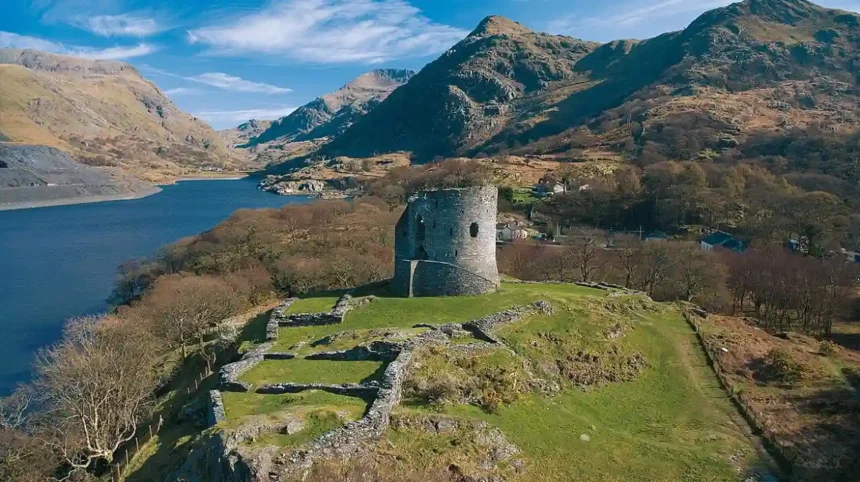
Castle in south wales represent a dense concentration of medieval military architecture built primarily during the Anglo-Norman conquest and subsequent Welsh uprisings. These stone and earthwork structures served as strategic administrative hubs, royal residences, and defensive outposts across the historic counties of Glamorgan, Monmouthshire, and Carmarthenshire.
- How does caerphilly castle demonstrate fourteenth-century military engineering?
- What role did conwy castle play in medieval strategic defense networks?
- Why was chepstow castle built along the river wye?
- How did raglan castle redefine late medieval domestic and defensive architecture?
- Frequently Asked Questions
The architectural evolution of these fortifications shifted from timber motte and bailey designs to massive concentric stone strongholds featuring rounded towers, gatehouses, and advanced curtain walls. The topography of south wales heavily influenced the placement of these military assets, utilizing coastal cliffs, river valleys, and high ridges to maximize natural protection against attackers. Royal patrons and marcher lords invested immense financial resources into these construction projects to project political dominance over native Welsh princes.
Historical records from the National Monuments Record of Wales document over four hundred uk/local/swansea/castle/">castle sites or remains scattered across the southern region. This extensive network established a permanent administrative framework that reshaped the legal, economic, and social structures of medieval wales. The collapse of native rule culminated in the Edwardian conquest, which permanently altered the geopolitical landscape of the region and finalized the dominance of stone fortifications.
How does caerphilly castle demonstrate fourteenth-century military engineering?
Caerphilly castle functions as the largest fortress in wales and stands as a pioneering masterpiece of concentric medieval military design developed during the thirteenth century. Gilbert de Clare constructed the fortification starting in twelve sixty-eight to secure his territorial gains in Glamorgan against native Welsh forces led by Llywelyn ap Gruffudd. The layout incorporates an extensive water defense system, utilizing artificial lakes and moats that completely surround the inner and outer ward islands. This water defense mechanism served as a primary deterrent against sappers and siege engines by preventing direct structural undermining of the heavy stone curtain walls.
The inner ward features massive gatehouses equipped with portcullises, murder holes, and arrow loops designed to maximize defensive firepower during an assault. Advanced architectural elements include wet moats, massive drum towers, and an innovative concentric layout that allowed defenders to fire over lower walls from elevated positions. Historical restoration efforts led by the Marquess of Bute during the twentieth century stabilized the iconic leaning south-east tower, which tilts at an angle exceeding ten degrees. Cadw, the Welsh Government historic environment service, maintains the site as a scheduled monument and primary educational attraction for architectural historians worldwide.
What role did conwy castle play in medieval strategic defense networks?
Conwy castle serves as a definitive example of thirteenth-century military architecture commissioned by King Edward the First during his military campaigns in wales. Master James of Saint George designed the fortification between twelve eighty-three and twelve eighty-seven, integrating the natural rocky ridge directly into the defense perimeter. The structure features eight massive round towers and two barbicans that command the strategic estuary of the River Conwy, securing vital maritime supply lines. The inner ward contains royal chambers, a great hall, and private apartments that accommodated the monarch and his high-ranking administrative officials during wartime visits.
Defensive innovations include mural passages, machicolations, and symmetrical concentric living quarters that balanced residential comfort with supreme martial security against hostile forces. The surrounding town walls, stretching over one thousand two hundred meters, enclose the medieval borough and link directly with the fortress to create a unified defense system. UNESCO inscribed the castle and town walls as a World Heritage Site in nineteen eighty-six, recognizing its exceptional universal value under criteria relating to human genius. Modern preservation management by Cadw ensures that structural integrity remains intact while welcoming hundreds of thousands of international visitors annually.
Why was chepstow castle built along the river wye?
Chepstow castle occupies a strategic cliffside location overlooking the River Wye, functioning as one of the earliest post-conquest stone strongholds in Britain. William FitzOsbern, a close confidant of William the Conqueror, initiated construction in ten sixty-seven to control the crucial tidal river crossing and border region. The oldest surviving part of the complex is the great tower, which incorporates Roman bricks salvaged from nearby Venta Silurum to reinforce the masonry walls. Successive lords, including William Marshal and Roger Bigod, expanded the fortress by adding luxurious domestic ranges, advanced gatehouses, and defensive curtain walls during the twelfth and thirteenth centuries.
The strategic placement utilized the sheer limestone cliffs above the River Wye as a natural barrier that rendered conventional siege tactics largely ineffective. The castle gates feature original oak doors dating back to the twelfth century, recognized as the oldest surviving castle doors in all of Europe through dendrochronological testing. Archaeological excavations at the site have uncovered extensive domestic artifacts, military hardware, and structural foundations that illustrate daily life for medieval garrisons. The property remains a cornerstone of Welsh heritage tourism, managed actively by Cadw to promote public understanding of Anglo-Norman border fortifications.
How did raglan castle redefine late medieval domestic and defensive architecture?
Raglan castle represents a sophisticated transition from purely utilitarian military fortresses to luxurious fortified aristocratic residences during the late medieval period. Sir William ap Thomas began transforming an existing manor house into a grand stone castle starting in fourteen thirty-two, followed by extensive expansions by his son. The architectural centerpiece is the massive yellow tower of gwent, a freestanding hexagonal keep surrounded by a dedicated water-filled moat and advanced gunports. The domestic ranges feature large traceried windows, opulent state apartments, and a spacious fountain court designed to display the wealth and cultural prestige of the Herbert family.
Despite its refined residential features, the castle incorporated advanced artillery defenses tailored to withstand gunpowder weapons during the fifteenth century conflicts of the Wars of the Roses. During the English Civil War, the fortress endured a grueling thirteen-week parliamentary siege led by Sir Thomas Fairfax before surrendering in sixteen forty-six. Parliamentary forces subsequently slighted the castle, intentionally breaching the walls and towers to prevent its future use as a military stronghold by royalist factions. Today, the extensive ruins are managed by Cadw, providing visitors with clear insights into late medieval lordly ambition, masonry craftsmanship, and military destruction.
Frequently Asked Questions
What is the largest castle in South Wales?
Caerphilly Castle is the largest fortress in Wales and the second-largest in Great Britain. Built in the thirteenth century by Gilbert de Clare, it covers a massive thirty-acre site. The complex is renowned for its extensive artificial lakes, concentric water defenses, and innovative gatehouses.
Which South Wales castle has the oldest wooden doors in Europe?
Chepstow Castle features the oldest surviving castle wooden doors in all of Europe. Scientific dendrochronology testing confirms that these massive oak doors date back to the late twelfth century. They remain hanging in their original entrance position within the lower gatehouse of the fortress.
How many castles are located in Wales?
Historians estimate that Wales contains over six hundred castle sites, ruins, and standing structures. South Wales alone accounts for a significant portion of this total due to the heavy concentration of Norman marcher lordships. These fortifications range from simple earthen motte-and-bailey mounds to massive stone complexes.
Are dogs allowed inside Cadw castle sites in South Wales?
Most outdoor areas and ruins managed by Cadw in South Wales permit dogs on short leads. However, specific indoor exhibition spaces, historic roof structures, and enclosed historic rooms may restrict entry to service animals. Visitors should verify specific property guidelines online prior to traveling.
What caused the destruction of many castles in South Wales?
Many castles in South Wales suffered intentional destruction, known as slighting, during the seventeenth-century English Civil War. Parliamentary forces systematically damaged fortresses like Raglan Castle to prevent royalist factions from utilizing them. Decades of subsequent stone robbing by local residents further reduced many military strongholds to picturesque ruins.