
Skanda Vale is an interfaith spiritual monastery and place of pilgrimage situated in Carmarthenshire, South West Wales. The sanctuary operates under the administrative guidance of the Community of the Many Names of God. Guru Sri Subramanium established the sanctuary in July 1973 after relocating his multi-faith worship group from London to a rural farm plot near Llanpumsaint. The foundational philosophy rests on Sanatana Dharma, emphasizing that all genuine religious traditions derive from and merge into a single divine reality. The sanctuary maintains an expansive natural footprint covering over 300 acres of mixed woodland, pasture, and conservation land.
- How Was Skanda Vale Founded and Developed Historically?
- What Are the Primary Temples and Structural Components of Skanda Vale?
- What Is the Significance of Lord Murugan Temple at Skanda Vale?
- What Role Does Maha Shakti Temple Play in Daily Worship?
- How Does Sri Ranganatha Temple Integrate Water and Deities?
- What Is the Daily Routine and Worship Schedule for Monastics and Pilgrims?
- What Are the Essential Rules and Etiquette for Visiting Skanda Vale?
- How Does Skanda Vale Function as an Animal Sanctuary and Hospice?
- Frequently Asked Questions
- What should I wear when visiting the Hindu temple in Wales Skanda Vale?
- How do I get free food and accommodation at Skanda Vale in Wales?
- Can non-Hindus attend daily rituals and worship at Skanda Vale?
- Why is there a dietary rule about eating meat before visiting Skanda Vale?
- Is there an elephant living at the Skanda Vale temple in Wales?
Monastics and lay residents live full-time at the site, holding vows of poverty, chastity, and obedience aligned with Franciscan traditions alongside Hindu monasticism. The community receives over 90,000 pilgrims each year, providing free meals, accommodation, and spiritual guidance without commercial charges or mandatory fees. The sanctuary provides holistic care through a self-funded, volunteer-run palliative care facility named Skanda Vale Hospice.
How Was Skanda Vale Founded and Developed Historically?
Guru Sri Subramanium founded Skanda Vale in 1973 on a 22-acre agricultural smallholding in Carmarthenshire. Sri Subramanium was born in Sri Lanka in 1929 and migrated to the United Kingdom after the Second World War. The original farmhouse was renovated to house the Sri Subramanium Temple, dedicated primarily to Lord Murugan. The community gradually expanded the physical grounds from 22 acres to 300 acres through land acquisitions to accommodate growing numbers of pilgrims. Construction of the Maha Shakti Temple began on a high woodland ridge, opening for worship in 1991.
The community established Skanda Vale Hospice in 1993 to offer free respite and end-of-life care to patients with life-limiting illnesses. The Sri Ranganatha Temple opened in 1999 to facilitate worship of Lord Vishnu. Guru Sri Subramanium passed away in July 2007, leaving the governance to the resident monastic order. In 2016, the monastic order established an international affiliate, Somaskanda Ashram, located in the Swiss Alps.
What Are the Primary Temples and Structural Components of Skanda Vale?
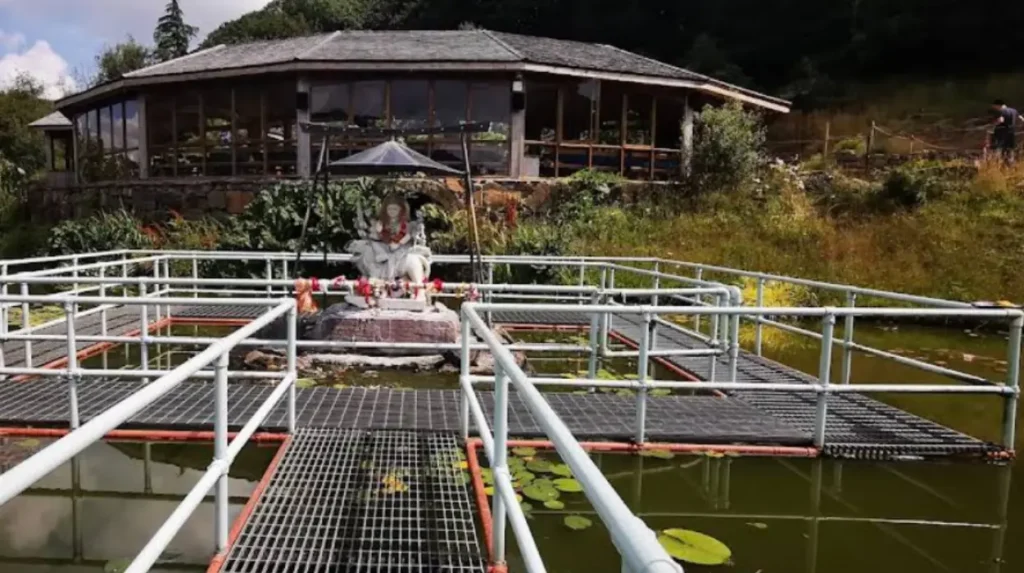
Skanda Vale houses four primary worship centers embedded across its wooded valley terrain. The Lord Murugan Temple sits at the lower floor of the valley, functioning as the central sanctuary for the community. The Maha Shakti Temple sits atop a elevated hill reached via a steep woodland pathway. The Sri Ranganatha Temple occupies a central plateau, housing dynamic water features and sacred statuary. The fourth worship center is dedicated to Shirdi Sai Baba, serving as an open sanctuary for personal reflection.
Key structural elements include the Samadhi shrine, marking the final resting place of founder Guru Sri Subramanium. The physical site integrates livestock barns, an animal sanctuary, accommodation blocks, and a centralized dining hall. The property uses renewable energy installations, including a micro-hydroelectric generator and wind turbines, to power site infrastructure.
What Is the Significance of Lord Murugan Temple at Skanda Vale?
The Lord Murugan Temple serves as the original spiritual anchor constructed within the converted farm estate. Lord Murugan, also known as Skanda, Subramanya, or Kartikeya, represents the embodiment of divine wisdom, courage, and spiritual mastery. Sanctified statues housed inside include Lord Murugan along with Valli and Deivayanai, Lord Ganesha, and Shiva Lingams. Monastics perform three specific daily worship ceremonies at 5:00 AM, 1:30 PM, and 9:00 PM inside this facility.
Worship includes traditional Sanskrit chanting, ritual lamp offerings known as Aarti, and sacred musical instrumentation. The temple interior includes dedicated altars honoring Jesus Christ and the Buddha to reflect interfaith devotion. Thousands of devotees gather at this temple during annual festivals, such as Navaratri and Skanda Sashti, to conduct special penances.
What Role Does Maha Shakti Temple Play in Daily Worship?
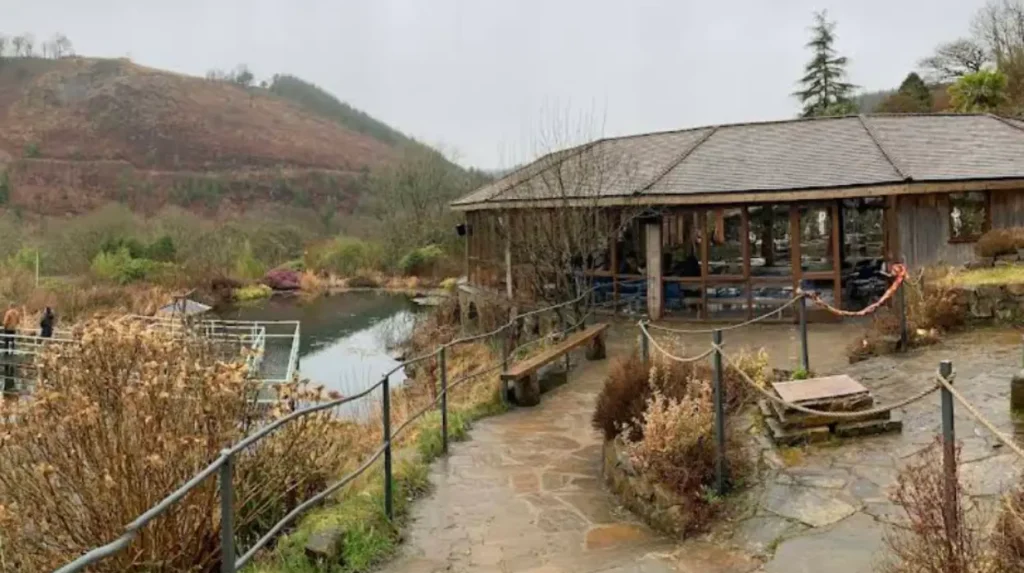
The Maha Shakti Temple represents the divine feminine aspect of creation, known within Sanatana Dharma as Shakti or Kali. Located on the highest point of the sanctuary ridge, the temple requires pilgrims to complete a uphill walk through native woodland. Worship ceremonies occur twice daily at 6:30 AM and 6:00 PM. Monastics lead intensive ritual offerings utilizing fire, holy water, and floral garlands to honor Mother Kali.
The physical design keeps the inner sanctum closed outside of worship times to preserve an atmosphere of concentrated spiritual energy. During monthly full moon nights, monastics conduct extended worship processions featuring sacred chants and traditional music. Pilgrims visit this temple specifically to pray for emotional healing, spiritual strength, and the removal of inner obstacles.
How Does Sri Ranganatha Temple Integrate Water and Deities?
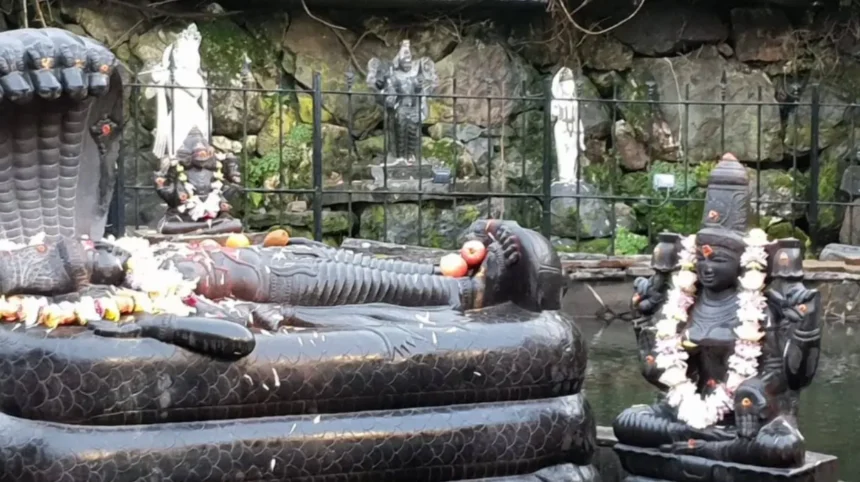
The Sri Ranganatha Temple is dedicated to Lord Vishnu, the preserver deity in Hinduism, depicted in a reclining pose. The interior architectural design integrates an open-roof central courtyard featuring a natural pool fed by a running waterfall. A stone murti of Sri Ranganatha rests on the multi-headed serpent Ananta Shesha directly within the central water pool. Goddess Lakshmi, the consort of Vishnu, stands adjacent to the central deity alongside supplementary statues of divine manifestations.
The primary daily worship ceremony occurs every morning at 9:30 AM. Unlike the other closed sanctuaries, the Sri Ranganatha Temple remains open continuously 24 hours a day for silent personal prayer. Devotees practice quiet meditation along the perimeter covered walkways while listening to the continuous flow of sacred water.
What Is the Daily Routine and Worship Schedule for Monastics and Pilgrims?
Daily operations at Skanda Vale center around six formal worship ceremonies performed every single day of the year. The daily schedule begins at 5:00 AM with the morning ritual at the Lord Murugan Temple. Worship continues at 6:30 AM at the Maha Shakti Temple, followed by the 9:30 AM service at the Sri Ranganatha Temple. Monastics perform the afternoon ritual at 1:30 PM at the Murugan Temple, followed by free vegetarian food distribution.
Evening rituals take place at 6:00 PM in the Maha Shakti Temple and conclude at 9:00 PM in the Lord Murugan Temple. Between ceremonies, monastics and volunteers engage in Karma Yoga, consisting of cooking, property maintenance, and animal care. Visitors participate in congregational singing, receive sanctified food offerings called Prasadam, and perform voluntary physical tasks.
What Are the Essential Rules and Etiquette for Visiting Skanda Vale?
Visitors must observe strict behavioral and dietary guidelines established by the Community of the Many Names of God. Guests who have consumed meat, fish, or poultry within three days prior to arrival must remain on external temple terraces. Footwear must be removed before stepping onto covered temple walkways or entering inner sanctums. Photography, video recording, and mobile phone usage are strictly forbidden inside all temple buildings. Attendees must dress modestly, covering shoulders and knees completely while present on sanctuary property.
The community requests visitors to speak softly and refrain from bringing commercial items, alcohol, or illicit substances. Admission, overnight lodging, and meals are provided without charge, though voluntary anonymous donation boxes are positioned across the site.
How Does Skanda Vale Function as an Animal Sanctuary and Hospice?
Skanda Vale operates an active animal sanctuary that provides permanent care to hundreds of domestic and wild animals. The resident animal population includes cows, water buffalo, deer, goats, birds, and an Asian elephant named Valli. Valli was gifted to the sanctuary by the President of Sri Lanka in 1981 and resides in a custom elephant sanctuary on site. The community adheres to the principle of Ahimsa, or non-violence, rescuing neglected animals from slaughter houses.
Skanda Vale Hospice provides free palliative care to individuals diagnosed with advanced life-limiting conditions. Qualified doctors, registered nurses, and trained monastic volunteers staff the six-bed inpatient hospice unit. The hospice operates independently of state funding, supported entirely by voluntary donations and unpaid community labor.
What Impact Does Skanda Vale Have on Interfaith Understanding and Modern Society?
Skanda Vale demonstrates a practical working model of interfaith harmony within a secular European environment. The monastery integrates Eastern spiritual traditions with Western monastic practices, creating an accessible pilgrimage venue in Wales. By offering services without fees, the community challenges modern commercialized models of spiritual tourism.
The sanctuary demonstrates environmental sustainability through land management, organic farming, and off-grid power generation. Skanda Vale Hospice provides a blueprint for non-profit, compassionate end-of-life care in rural communities. The sanctuary attracts 90,000 visitors annually, fostering cultural exchange between South Asian diaspora communities and local Welsh residents. The enduring operation of the sanctuary proves the viability of faith-driven, service-oriented monastic living in contemporary society.
Frequently Asked Questions
What should I wear when visiting the Hindu temple in Wales Skanda Vale?
You must dress modestly by covering your shoulders, upper arms, and legs completely down to the ankles. Modest clothing like loose trousers, long skirts, and long-sleeved shirts are recommended. You are also required to remove all footwear before entering any temple indoor areas or covered worship terraces.
How do I get free food and accommodation at Skanda Vale in Wales?
Skanda Vale provides free vegetarian meals known as Prasadam after the main daily worship services to all visitors. Free basic accommodation is available for pilgrims who book in advance through the official temple office website.
Can non-Hindus attend daily rituals and worship at Skanda Vale?
Yes, non-Hindus and people of all religious or non-religious backgrounds are welcome to attend all daily worship ceremonies. Skanda Vale is an interfaith monastery founded on the principle that all religions lead to one divine reality.
Why is there a dietary rule about eating meat before visiting Skanda Vale?
The community requests that anyone who has eaten meat, fish, or poultry within three days before visiting stay on the outer temple terraces. This rule maintains the ritual purity and non-violent energy cultivated within the inner sanctums of the temples.
Is there an elephant living at the Skanda Vale temple in Wales?
Yes, Skanda Vale is home to an Asian elephant named Valli who has lived at the sanctuary since 1981. Sri Lanka’s President presented Valli to the temple as a gift when she was a baby calf. She is cared for by the monastic community as part of their dedicated animal sanctuary program.