
The place in Wales with the longest name is the village of Llanfairpwllgwyngyllgogerychwyrndrobwllllantysiliogogogoch, located on the island of Anglesey in North Wales. Containing 58 letters in the English alphabet and 51 letters in the traditional Welsh alphabet, it holds the official record for the longest place name in Europe and the second longest single-word place name in the world. The village sits directly on the Menai Strait, facing the mainland of Wales near the town of uk/local/bangor/">Bangor. Geographically, it covers approximately 3.1 square kilometers within the historic county of Anglesey. The full name was deliberately expanded in the nineteenth century from its original medieval designation for promotional and railway expansion purposes.
- How Did Llanfairpwllgwyngyllgogerychwyrndrobwllllantysiliogogogoch Get Its Name?
- What Is the Exact Meaning and Translation of the Full Name?
- What Is the Historical Background and Origin of the Village?
- Where Is the Longest Named Place in Wales Located?
- How Do You Correctly Pronounce This Famous Welsh Place Name?
- What Are the Key Landmarks and Attractions in the Village?
- How Does the Village Name Compare to Other Long Place Names Globally?
- How Does the Village Impact Tourism and the Local Economy?
- What Is the Significance of the Welsh Language in This Place Name?
- Frequently Asked Questions
- What is the short name for Llanfairpwllgwyngyllgogerychwyrndrobwllllantysiliogogogoch?
- How many letters are in the longest place name in Wales?
- Can you travel to the longest named place in Wales by train?
- Is Llanfairpwllgwyngyllgogerychwyrndrobwllllantysiliogogogoch the longest place name in the world?
- Why was the name made so long in the nineteenth century?
Local residents often abbreviate the name to Llanfairpwll or Llanfair PG for daily administrative convenience and everyday conversation. The area functions as a thriving residential community and major cultural landmark within North Wales. Visitors travel globally to experience the village, inspect the railway platform signage, and learn about regional historic heritage. The geographical coordinates locate the center of the village at 53.221 degree North latitude and 4.208 degree West longitude. Transportation links include the main A5 road and the North Wales Coast Line, which connects the location to major UK transit hubs.
How Did Llanfairpwllgwyngyllgogerychwyrndrobwllllantysiliogogogoch Get Its Name?
Llanfairpwllgwyngyllgogerychwyrndrobwllllantysiliogogogoch received its current extended name in the 1860s through a deliberate promotional effort by a local tailor. Originally named Llanfair Pwllgwyngyll, the village leadership sought a commercial strategy to attract railway passengers traveling between London and Holyhead. The expanded name was composed by combining local topographical features and religious dedications into a single descriptive Welsh sentence. The name translates directly into English as Saint Marys Church in the hollow of the white hazel near to the rapid whirlpool and the church of Saint Tysilio of the red cave. The strategic naming decision coincided with the expansion of the Chester and Holyhead Railway system across North Wales.
The longer name successfully transformed a quiet agricultural community into a world-famous tourist stop along the line. Railway authorities adopted the full name for the official station signboard, solidifying its status in national gazetteers. Historical archives confirm that the 58-letter name appeared on official postal records starting in the late Victorian era. The linguistic structure reflects traditional nineteenth-century Welsh syntax, utilizing compound nouns and prepositional phrases. Today, the name remains an enduring example of early destination marketing and cultural preservation in Wales. The village retains its historical reputation while maintaining active transit connections for modern visitors exploring the best North Wales attractions to visit.
What Is the Exact Meaning and Translation of the Full Name?
The full name translates into English as Saint Marys Church in the hollow of the white hazel near to the rapid whirlpool and the church of Saint Tysilio of the red cave. Each segment of the long Welsh word corresponds to specific geographical markers surrounding the parish. The initial segment Llanfair refers to the historic church dedicated to Saint Mary built within the local community. Pwllgwyngyll identifies the specific geological hollow containing white hazel trees where the early settlement developed. Gogerychwyrndrobwll describes the fierce tidal whirlpools created by water currents within the nearby Menai Strait.
Llantysilio points to the second historic religious site dedicated to Saint Tysilio located on nearby Church Island. The final element gogogoch specifies the distinct red cave features found along the adjacent rocky coastline. Welsh language orthography treats compound digraphs like ll, ch, and ng as single distinct letters in the alphabet. Because of these linguistic rules, the name contains 51 Welsh letters despite using 58 Latin characters in standard English writing. The description served as an accurate landmark map for travelers in medieval and Victorian eras before modern coordinates existed. Each word root provides precise geographical intelligence about soil type, native vegetation, aquatic hazards, and sacred places. Understanding the translation reveals how ancient and nineteenth-century Welsh scholars encoded environment descriptions into administrative place names.
What Is the Historical Background and Origin of the Village?
The historical background of the village originates in the early medieval period with original agricultural settlements established around the local church. Historical documents indicate that the region was inhabited during the Neolithic and Bronze periods prior to Roman occupation. The original parish was established as Llanfair Pwllgwyngyll, serving a modest rural community centered on farming and fishing. The proximity to the Menai Strait allowed residents to access maritime trading routes across the Irish Sea and mainland Wales. During the Middle Ages, the village remained under the influence of the Bishops of Bangor and local Welsh nobility.
The nineteenth century brought dramatic industrial change with the construction of the Menai Suspension Bridge and Britannia Bridge. Thomas Telford and Robert Stephenson engineered these transport links, connecting Anglesey directly to the mainland railway network. The opening of the railway station in 1848 transformed the village from an isolated settlement into an accessible transit point. Local enterprise seized upon the influx of rail travelers to expand the village name as a promotional highlight. The nineteenth-century census records show rapid population growth following the arrival of transport infrastructure and retail trade. Today, the historical center retains key Victorian architecture, early railway structures, and historic churches that reflect its evolution over centuries.
Where Is the Longest Named Place in Wales Located?
The longest named place in Wales is located in the southern part of Anglesey, an island off the northwest coast. The village sits elevated above the western shore of the Menai Strait, directly across from Gwynedd and mainland Wales. It is situated approximately 3 kilometers west of the city of Bangor and 9 kilometers east of Llangefni. The settlement is accessed via the A5 trunk road and sits close to Junction 8 of the modern A55 dual carriageway. Geographically, the area features rolling farmland, tidal marine waters, mixed woodland, and rocky coastal outcrops along the strait.
The Menai Suspension Bridge lies less than 2 kilometers to the east, serving as a historic landmark gateway to the village. The local railway station sits on the North Wales Coast Line, offering direct passenger transit to Holyhead and Chester. Coordinates for the village center are recorded as 53 degrees 13 minutes North latitude and 4 degrees 12 minutes West longitude. The surrounding region offers panoramic views of the Carneddau and Snowdonia mountain ranges across the mainland waters. Travelers visiting the location can easily expand their itinerary to explore wider regional geography, including what are the main mountains in Wales and how can you explore them.
How Do You Correctly Pronounce This Famous Welsh Place Name?
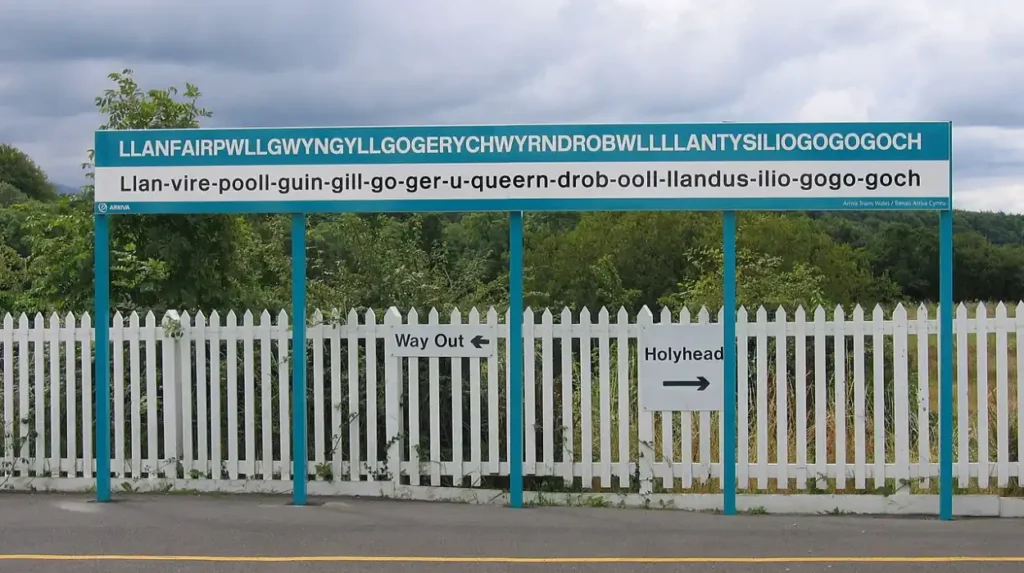
Correctly pronouncing the 58-letter name requires breaking the long word down into smaller phonetic syllables using traditional Welsh rules. The phonetic spelling can be rendered as Llan-vire-pull-gwin-gill-go-ger-uch-wirn-drob-ull-llan-tih-sil-ee-oh-go-go-goch in English phonetic guides. The double L sound represented by Ll requires placing the tongue on the roof of the mouth and releasing air smoothly around the sides without voicing. The ch sound is produced in the back of the throat, similar to the sound used in the Scottish word loch. The first section Llanfair is pronounced as Llan-vire, where the ai diphthong creates a long i sound as in night.
Pwllgwyngyll is pronounced as pull-gwin-gill, with the w functioning as a short vowel sound equivalent to look. Gogerychwyrndrobwll translates phonetically into go-ger-uch-wirn-drob-ull, maintaining hard g sounds throughout the multi-syllable construction. Llantysilio is pronounced as llan-tih-sil-ee-oh, accentuating the middle syllables before shifting to the final word segments. The final segment gogogoch uses three short o vowels ending with the soft guttural ch throat sound. Local residents and tourism centers offer audio guides, educational videos, and phonetic maps to help visitors master the pronunciation. Learning the pronunciation provides visitors with a deeper understanding of Welsh phonology, historical linguistics, and regional identity.
What Are the Key Landmarks and Attractions in the Village?
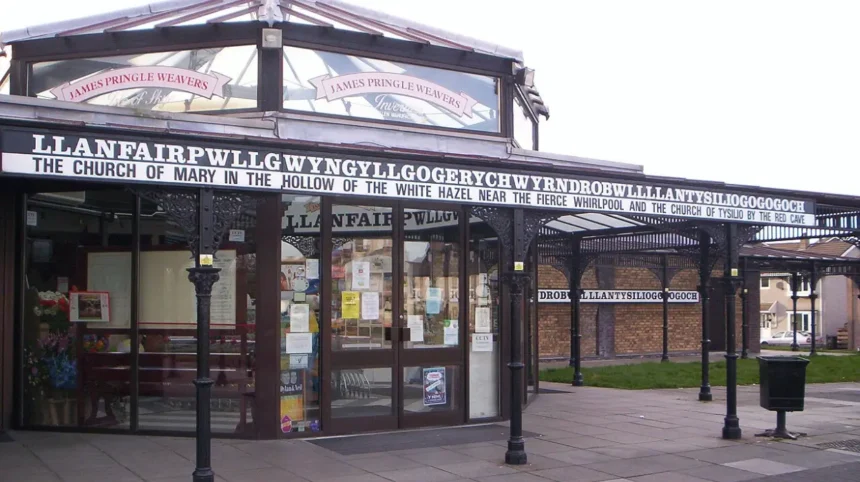
The key landmarks in the village include the historic railway station, the Marquis of Anglesey Column, and Church Island. The primary attraction for visitors is the long official signboard running along the platform of the active railway station. Visitors regularly gather at the platform to take photographs alongside the 58-letter administrative sign and historical displays. Adjacent to the station sits the James Pringle Weavers shopping complex, which serves as a major tourist hub and visitor center. Another notable landmark is the Marquis of Anglesey Column, a 27-meter stone monument built in 1816 to honor Henry Paget.
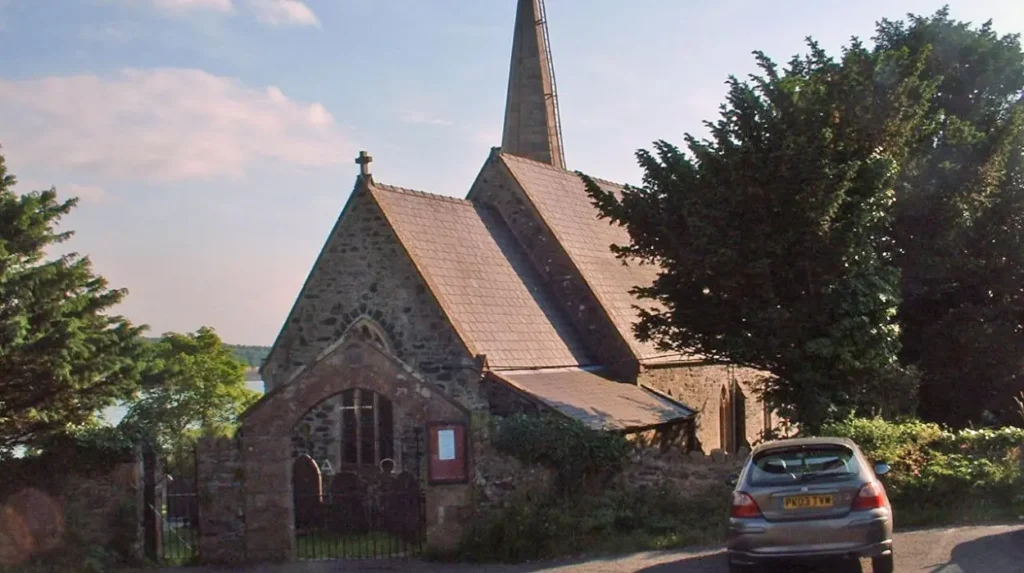
The column features a public viewing platform at the top, offering sweeping views of the Menai Strait and Snowdonia mountains. Saint Marys Church stands near the water, representing the original parish site that gave the village its core historic name. Church Island, accessible via a causeway, features the medieval Saint Tysilio Church surrounded by historic graveyards and woodland trails. Local retail centers offer official passport stamps, certificates, and souvenirs confirming a visit to the famous location. Visitors often pair their trip with sports or leisure outings, such as reviewing what makes Nefyn Golf Club North Wales a premier coastal destination.
How Does the Village Name Compare to Other Long Place Names Globally?
The village name compares prominently on the global stage, holding official world records for geographical naming length and regional recognition. It is officially recognized as the longest place name in Europe and the second longest single-word place name globally. The world record holder for the longest place name is Taumatawhakatangihangakoauauotamateaturipukakapikimaungahoronukupokaiwhenuakitanatahu in New Zealand. That Maori hill name contains 85 letters, surpassing the Welsh village by 27 total characters in official documentation. In North America, the longest official place name is Lake Chargoggagoggmanchauggagoggchaubunagungamaugg located in Massachusetts, USA.
That Native American lake name contains 45 letters, making it shorter than the 58-letter Welsh village title. In Australia, the longest official place name is Mamungkukumpurangkuntjunya, a pitjantjatjara word containing 26 letters in total length. Within the United Kingdom, Llanfairpwllgwyngyllgogerychwyrndrobwllllantysiliogogogoch remains undisputed as the longest administrative title ever registered. Other notable long place names in Wales include Gorsafawddacha’idraigodanheddogleddollandysilio-gogoch, a 67-letter railway name created for publicity. However, that promotional railway name was never officially recognized by postal authorities or government gazetteers as a genuine village name. The 58-letter Anglesey village retains its undisputed official status across international geography databases and cartographic records.
How Does the Village Impact Tourism and the Local Economy?
The village name impacts the local economy by driving international tourism and supporting retail commerce throughout southern Anglesey. Hundreds of thousands of visitors travel to the village annually to photograph the railway signage and purchase commemorative merchandise. The high influx of tourists provides steady revenue for local shops, cafes, accommodation providers, and transit services. The James Pringle Weavers visitor center functions as a primary economic engine, employing local staff and stocking Welsh goods. Local post offices handle elevated mail volumes as travelers send postcards stamped with the full 58-letter postmark.
The village leverage its unique geographic identity to feature in international travel guides, television broadcasts, and digital media platforms. Local authorities invest in infrastructure, parking facilities, pedestrian paths, and signage to accommodate seasonal visitor volume efficiently. Tourism revenue generated in the village helps sustain public amenities and historical preservation projects across the parish. The visibility of the village also draws wider attention to neighboring towns and attractions across the Isle of Anglesey. Educational groups and linguistic scholars regularly visit to study Welsh language preservation, regional heritage, and community development. The economic model proves how cultural heritage and marketing history can successfully sustain a modern rural community.
What Is the Significance of the Welsh Language in This Place Name?
The significance of the Welsh language in this place name centers on cultural identity, linguistic preservation, and historical continuity. Welsh is one of the oldest continuous languages in Europe, descending from the ancient Celtic Brythonic spoken across Britain. The village name reflects authentic Welsh grammar, utilizing compound nouns, prepositional phrases, and descriptive topographical vocabulary. The retention of the long name serves as an active shield for preserving native vocabulary in a globalized society. Local schools, community groups, and administrative bodies use Welsh daily, keeping the language vibrant across Anglesey. The worldwide fame of the village name introduces global audiences to the unique sounds and structure of the language.
Visitors learn that Welsh uses distinct digraphs such as dd, ff, ll, and rh as single letters. The geographic descriptive tradition preserved in the name highlights how native speakers mapped their environment using natural landmarks. Government policies in Wales protect and promote the official status of the language across public road signs and education. The village remains a proud symbol of Welsh cultural resilience, demonstrating how language shapes place, history, and identity. Media outlets and regional history archives like what is the North Wales Chronicle and how was it established document this ongoing cultural journey.
Frequently Asked Questions
What is the short name for Llanfairpwllgwyngyllgogerychwyrndrobwllllantysiliogogogoch?
The short name used by local residents is Llanfairpwll or Llanfair PG. These abbreviations appear on local road signs, bus schedules, and everyday administrative documents across North Wales.
How many letters are in the longest place name in Wales?
The name contains 58 letters when using the standard English alphabet. However, in the official Welsh alphabet, digraphs like ll and ch count as single letters, bringing the Welsh count to 51.
Can you travel to the longest named place in Wales by train?
Yes, you can travel directly to the village railway station via the Transport for Wales rail network. The station sits on the North Wales Coast Line operating regular passenger services between Holyhead and Chester.
Is Llanfairpwllgwyngyllgogerychwyrndrobwllllantysiliogogogoch the longest place name in the world?
No, it is the second longest single-word place name in the world, behind a hill in New Zealand with 85 letters. However, it holds the official record as the longest place name in Europe.
Why was the name made so long in the nineteenth century?
The name was expanded in the 1860s by a local tailor to attract railway tourists to the village. The extended title combined local topographical features to create a unique publicity feature along the railway line.